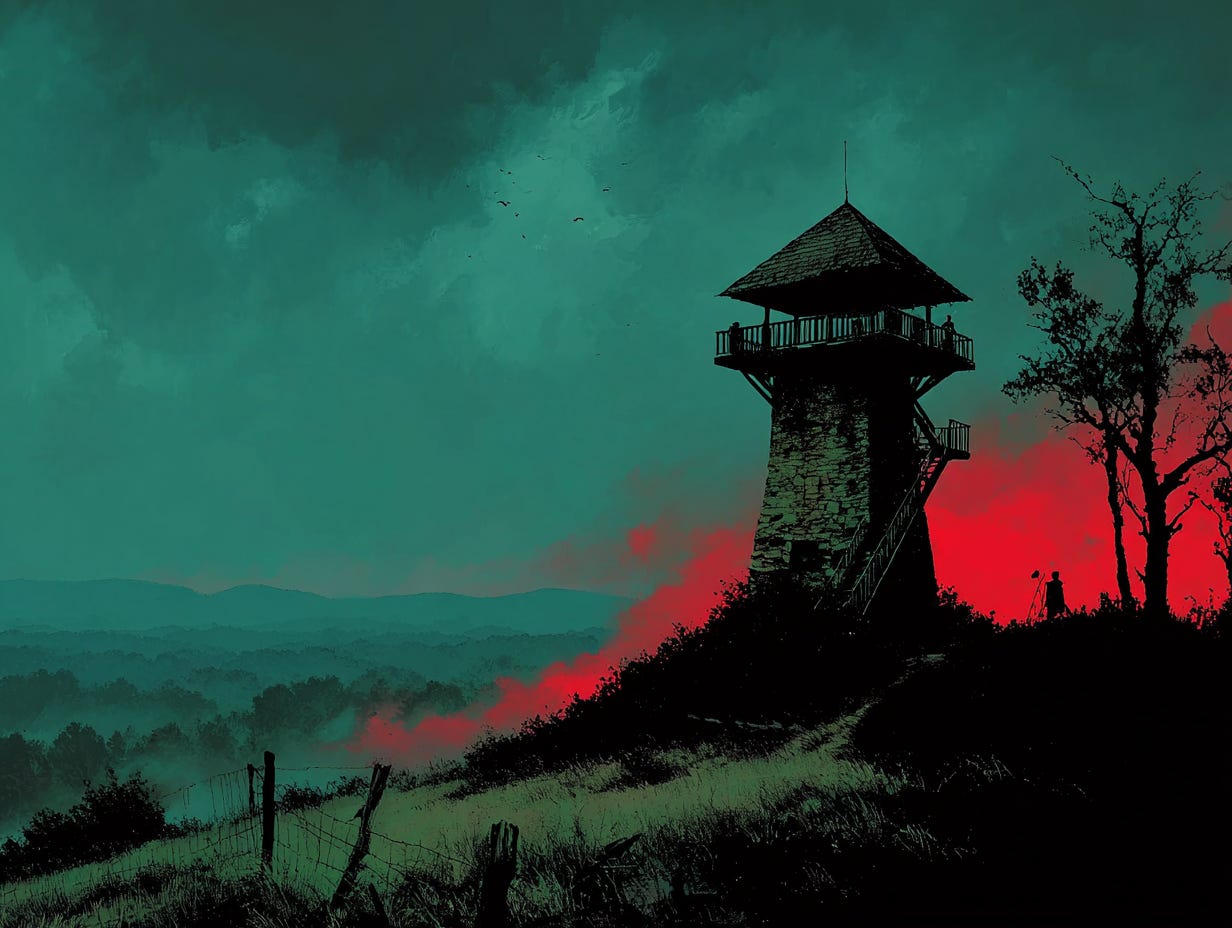
Deep in the gut of West Virginia there’s a place where families spread blankets and children chase each other through the grass. Pocahontas County locals have heard things for generations. Gunfire. Distant shouting. Something mournful bleeding out of the tree line at dusk when the light goes bad.
There’s a lookout tower in the park. Climb it and the whole world opens up. The Alleghenys roll on forever and the Greenbrier River Valley spreads out below like something God drew on a good day. It was here, on this ground, four and a half months after West Virginia was cut from Virginia’s side, that the Confederacy’s last breath in the new state rattled out and went still.
They call it the war of brothers and mostly that’s poetry, but here it was just true. These weren’t boys from Georgia or Carolina come up to die in the hills. These were Appalachian farmers and woodsmen fighting for hollows they knew by name, against men who knew the same creek bends and the same silences. The boys on both sides had hunted these ridges and knew exactly what they were losing.
They were teenagers, most of them. Expendable currency. Spent by old men on an idea.
When it was over, the dead went into shallow graves and the wounded went into the cold of November in the highlands. For years after, the earth kept giving the bodies back. Bones pushing up through the soil like the land couldn’t stomach what had been fed to it.
The winners wrote it the way winners always do. The last real witnesses, old growth trees that saw everything, got logged off. Gone. And then they built a park. Picnic tables. A playground.
A playground on top of all those boys.
Droop Mountain isn’t a ghost story. Droop Mountain haunts us with the truth about what war costs and about who pays, because we are just too happy to forget.

