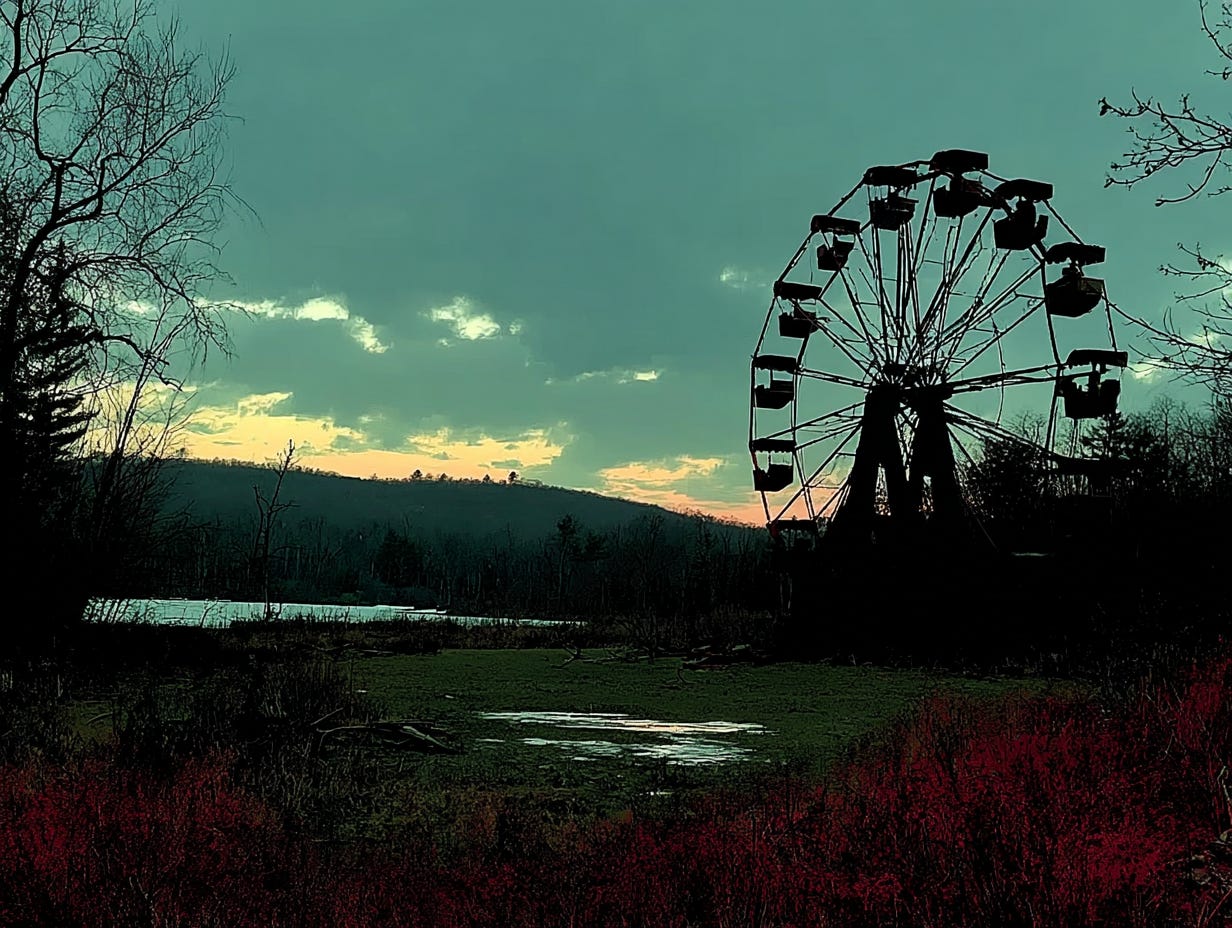
In the late 1920s, a coal operator named Conley T. Snidow had big dreams and wild ambitions. He bought a stretch of land outside Princeton, West Virginia. It was raw, wooded, and unwanted. Where others saw waste, he imagined a dance hall, a man-made lake, and rides lit by bulbs and laughter. The park offered cheap distractions to families desperate for relief during the Great Depression: a Ferris wheel, a swing ride, and a pool fed by cold mountain water. Live music on the weekends. For a while, it worked.
Then people started dying.
Some said the land was cursed. Others said it was just bad luck. There are few things more dangerous than neglect masked with optimism. A boy was run over by a truck near the rides. People make mistakes. A girl was hurled from the swing ride, her body broken on impact. Machines fail. But land doesn’t forget simply because someone paints over the bloodstains.
Long before there were ticket booths, the Shawnee fought and died on that ground. The details are disputed, as they often are when history becomes inconvenient.
As the accidents piled up, attendance dropped. Maintenance slipped further. The park closed quietly in the late 1960s. The rides were left where they stood, rusting in place, waiting for customers who would never return. Nature reclaimed the grounds faster than anyone expected. Grass split the concrete. Trees wrapped themselves around steel. The lake went still.
Stories followed. Children laughing near the empty pool. A girl in a pink dress near the swings. Cold spots. Shadows. The usual stuff. But what sets Lake Shawnee apart isn’t the ghost stories, it’s how little imagination they require. Like abandoned military bases or the lost colony of Roanoke, the place feels deserted mid-motion, as if something paused and never resumed.
This is not a site of grand horror. There was no single catastrophic event to anchor the legend. No fire. No massacre. Just a slow accumulation of loss stacked on land that had already absorbed more than its share.
When the laughter stopped, all that remained was a fenced-off Ferris wheel decaying against the trees. It’s a massacre tired of pretending to be a playground. The real haunting isn’t that something stayed behind; It’s the history ignored, safety assumed, and responsibility deferred.
Lake Shawnee remains to remind you how quickly painted smiles crack when brushed over old grief.

